
Blood & Blues: The vampiric baptism in Sinners I didn't know I needed.
Links to my favorite writing and essays on the film with an entry of my own: How Remmick's baptism of Sammie broke me open.

I sat down to write this many times. Wrote something and threw it out. I orginally posted this on my Substack. It is rare that I go back to theaters multiple times for the same film. I think the last time I did that was for The Hobbit: Desolation of Smaug. The Hobbit was my first novel and I LOVE dragons. I had been waiting to see Smaug on screen since I was five. So it’s been a minute since a movie hooked me so hard I HAD to go back and see it again.
Sinners got into my brain and WOULD NOT let go. That was not a unique experience. It was a phenomena. In Chicago, it was hard to get tickets in IMAX for weeks. I debated driving three hours to the nearest 70mm screen in Indiana to see it. I listened to the soundtrack over and over. I consumed all interviews with Coogler. THAT is how much I loved this movie. I was sitting with a filmmaker friend over lunch and asked if she had seen it - She said no. So I LITERALLY bought tickets and marched us over to a theatre to watch it so I would have someone to talk about it with.
Thanks for reading! Subscribe for free to receive new posts and support my work.
Since then, there has been so many beautifully researched and written articles about the film. I struggled with what I would have to add to the conversation. Wanting to be seen as a “white girl who gets it,” knowing that is performative and icky. Everything I started to write felt wrong. So this essay will be a bit different. I am going to collate the resources who wrote about this film and direct you to them to read their thoughts. The first half of this will be more of a choose your own adventure in exploration. My hope is to point you to some super cool thinkers that you will follow. For a movie about cultural vampirism it felt empty to not do so. Let’s be honest, if I were in the film - I’d be singing Pick Poor Robin Clean with Remmick. So, that’s exactly where I want to focus. The second half of this essay will be more personal. I am going to talk about the scene with Remmick that ripped me open and planted a seed in my brain that hasn’t let go. This is A LONG ONE. So let us begin.
First, my non-spoiler review.
Sinners is an American gothic tale that takes us back to the Jim Crowe south to revel in the dark and recon with our demons. Its storytelling and music hook with sharp claws, while its emotional intelligence roots deep. Ryan Coogler and Autumn Durald deliver a stunning cinematic folk tale that feels timeless entered into the zeitgeist. History and culture are handled with care, music feels ethereal and humor will carry you through. Gather round the juke joint dear ones and listen, there be spoilers ahead.
Spoiler Review
Sinners is cathartic. A release spell. For those that felt its magic deeply, we found ourselves back in the theatre, multiple times to tap in. In interviews with Ryan Coogler, I appreciate how he talks about his first films. He said while making Fruitvale Station he was naive in thinking it would change the world - “if only people could see how they treated black men.” Since then, things have only gotten worse. As an artist, I am always looking for ways to talk about the complex uglies of our societies in ways that do change the world. I, like Coogler, used to think that if I could give people proof, justice would be served. I no longer think this. If the invention of the camera gave us an opportunity to show the truth, then we’d have experienced a long lasting peace. That has not happened. In fact, it fetishized trauma. We can now watch men and women being killed, live on the internet and nothing changes. Those who said the war in Vietnam came into people’s living rooms through the television thought that might pause our war hungry nature. It did not. I too tried that in my early career, hoping to show pain deep enough to change hearts. None of that mattered. Given current events - I think our exposure to violence has only widened the hunger for more violence. Seeing violence against “others,” means I am safe. That realization shifted the way I make films. I no longer seek to “collect tears,” on camera the way I did when I first started. I don’t center trauma.
Sinners is like that. It doesn’t center the atrocities of Jim Crowe south in the ways we’ve previously seen on screen. It centers the characters and their mythologies. It humanizes what they’ve been through. Music reclaiming it’s roots: A character. The juke joint: A character. The use of vampire as a vehicle to explore cultural appropriation and colonialism are earned. It’s performances cross into that spiritual plane. When Sammie plays I Lied To You, I had to clean my jaw off the floor. My entire body had goosebumps. I knew I had just seen something special. On repeat viewings, I’ve only fallen more in love with the film.
It’s not easy to use folklore to deliver commentary without becoming preachy. Which is why opening with a literal preacher and cutting back and forth to Remmick - is poignant. Ryan Coogler delivers folklore with Sinners. Smoke and Stack are instant classics, a double sided coin for reflection. Annie, Mary, Pearline and Grace are not afterthoughts as female characters. They have soul. Autonomy. The men in the film trust their intuition - which honestly, brought me to tears in a a genre that is usually about gas lighting female intuition. Sinners trusts female magic. Instant Oscars for the Del Ray scene in the car. Instant Oscar for the juke joint music sequences. Instant Oscar for the cinematographer handling multiple formats and creating such beauty on screen. An Oscar for writing. An Oscar for costumes. An Oscar for direction. An Oscar for MBJ. An Oscar for Buddy Guy. Just pass them out to everyone on this team and thank the academy for trying. There were lots of great movies this year but this one was it for me.
I could dive into all the symbolism and cinema references - but I am going to let you explore better writers on those topics. Because when I tell you this movie is well researched, I mean it.
So, here are resources and articles to guide your Sinner’s love affair:
The Syllabus
I want to start with The Sinners Syllabus - By Jemar Tisby & Keisha N. Blain. This list compiles all the Historical and Cultural references in the film. It is an EXTENSIVE resource guide that cross references all the music, history, spirituality, Black horror and vampire lore. I am still working through a lot of the material. Here are a few gems from the list I really loved.
Darkly: Black History and America’s Gothic Soul by: Leila Taylor
Part memoir and part cultural critique, Darkly reveals the heart of America’s darkness in the specters left from chattel slavery and the persistence of white supremacy. Locating the gothic in technologies of terror, the insurgency of melancholy, and the guilty conscience of a country that got away with murder, Darkly shows how this trauma has been metabolized into art, music, film, and literature.
A Place Like Mississippi A Journey Through a Real and Imagined Literary Landscape By W. Ralph Eubanks The South has produced some of America’s most celebrated authors, and no state more so than Mississippi. Names as diverse as Faulkner, Welty, and Ward have created a literary legacy spanning decades and stretching across lines of class, gender, and race. One thing binds together these wide- ranging perspectives—the land itself. In A Place Like Mississippi, W. Ralph Eubanks explores those ties and the ways in which the Magnolia State has fostered such a bounty of expression.
Blues People Negro Music in White America By Leroi Jones
“The path the slave took to ‘citizenship’ is what I want to look at. And I make my analogy through the slave citizen’s music—through the music that is most closely associated with him: blues and a later, but parallel development, jazz... [If] the Negro represents, or is symbolic of, something in and about the nature of American culture, this certainly should be revealed by his characteristic music.”
THE BANJO
If you haven’t heard of Rhiannon Giddens, it is time to learn. But first, start with the history of the Banjo. https://bittersoutherner.com/history-of-the-banjo. Rhiannon’s work reclaims the history of the banjo. If you have the privilege to hear her speak, do so. Here is a clip of her talking about the roots of culture: https://www.instagram.com/reel/DR2a55ODxnc/?utm_source=ig_web_button_share_sheet
A Sermon on the ending
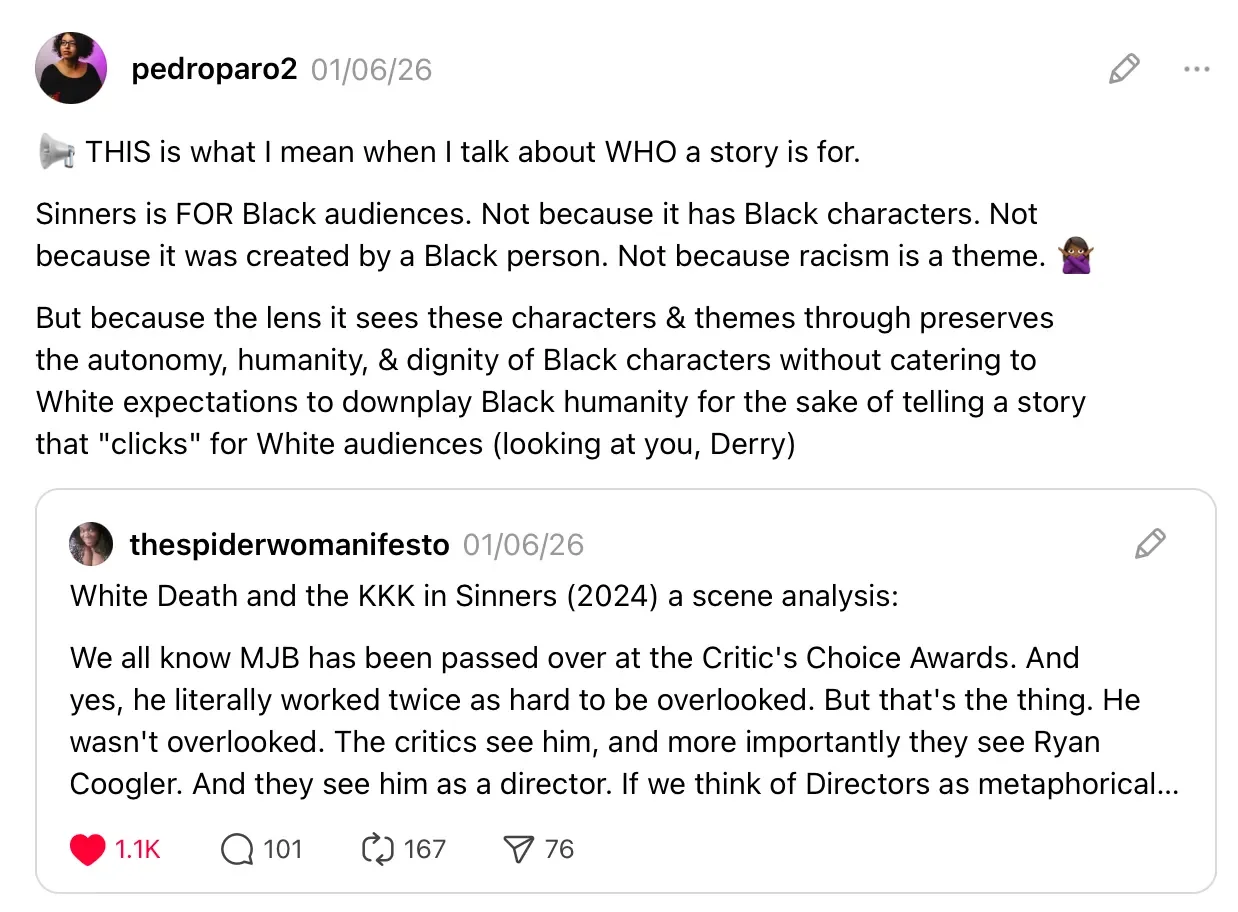
@thespiderwomanifesto - breaks down the final scene in Sinners and it is a SERMON. LINK TO THE FULL THREAD
Also, thank you to @pedroparo2 for all their work in the horror genre. I have learned so much from her writing. I have saved all her book recommendations and I think you should follow them both. They’ve been discussing Welcome to Derry and it is a masterclass.
On white devilry by Jamie Broadnax: https://blackgirlnerds.com/sinners-and-an-introspection-on-white-devilry/
Rooted in Chicago Blues
Let me tell you, as a child of Chicago that grew up seeing Buddy Guy. The SECOND I saw his hands on the guitar I gasped. Then literal tears. Buddy is a music god and if you were fortunate enough to live in Chicago and like the Blues - then you know how approachable and wonderful Buddy Guy is. He is a living legend. He’s the type of artists that will have a drink with you after a show. I LOVED his music growing up. The ending of this film made my heart soar. It’s use of blues music and reminding the world that all the genres of music we love today are rooted in Black culture is important. “Blues wasn’t forced on us like that religion. Nah, son, we brought this with us from home. It’s magic, what we do. It’s sacred, and big,” Delta Slim. Ryan names his main characters Smoke and Stack intentionally. I instantly thought of Howlin’ Wolf. His song Smokestack Lightning is on almost all my roadtrip playlists.
https://thebluegrasssituation.com/read/the-roots-music-of-ryan-cooglers-sinners-explained/ by Brittney McKenna.
On religion
Loved how Christian symbolism does not work to defeat the “evil,” in this film. In fact, Remmick isn’t even the “most evil.” The KKK is. Brilliant.
On Hoodoo
https://www.tabletmag.com/sections/community/articles/sinners-hoodoo-religious-consultant
Sound Mixing
Here is a great breakdown of the sound mixing in Sinners:
The Surgical Exactitude of 'Sinners' Sound Mixing
9 months ago · 2 likes · Meet Me at Crafty
Art History
For the Art History Buffs a deep dive into the Sugar Shack painting that is referenced in the juke joint.
Media Coverage
For how the film is being treated in the media:
9 months ago · 1874 likes · 147 comments · Joshua Smith
And finally, My actual Essay: The Vampiric Baptism I Didn’t Know I Needed.
One of the wild adventures of being an adult to getting a chance to examine the learning from childhood with a critical mind and deciding what is going forward and what is getting let go. When I was a kid and I had questions about religion, my mom took my sister and I to churches to decide what we liked. They were all Christian. As a kid, all I knew was my friends went to church and I wanted to know what it was about. I think back then, my questions were of social nature. As a teen, I left “the church,” when I started realizing it was a flawed power structure that didn’t actually value questions, curiosity or critique. Especially from a woman. I wasn’t sad about it. I felt empowered in my decision. I could not agree with a structure that told me gay people were the devil or that my dad was going to hell for being an atheist or that divorcees could never hold leadership. That was at odds with my values.
I wonder what I would have selected as a religion if we had visited all of them. I wasn’t making an informed decision. I was making one with skewed information. These days, I am extremely spiritual. But my practices are not practices of any major religion and I certainly try avoiding the weird white spiritual girlies of the moment that don’t think revolution is spiritual. If it’s too much “love and light,” I’m out. I like the goddess Kali. I need my spiritually not to soothe the evils of the world within me but to tell me how to dismantle it.
I love how we as a species create to explain the unexplained. I am a hermit, one of study. Avoiding any group that requires strict obedience without question. I’ve traveled to visit Buddhist temples, I’ve been invited to Mosques, I’ve researched and acknowledged the land, I’ve danced around the full moon fires with witches, I’ve sat with holy men, I’ve been berated at Jesus camp, I did AWANAS as a kid and memorized bible versus for stickers, I’ve learned what are closed practices and what they mean, I talk to trees, I meditate, I read tarot, I trust my intuition. My journey has only led me more inward and curious. But I have never felt like I have belonged to any one or anything. That grief is ever present. I think I’ll carry it forever. I think it’s my soul work.
The first time I read A History of White People by Nell Irving - I literally threw the book across the room after every chapter but it unlocked in me a truth I had always felt: Whiteness and the invention of race stole my connection to identity in exchange for safety and power. It consolidated and deleted the histories and practices of my ancestors. It took away my ability to know who I was, to know the culture I came from and demanded I reinforce the new story or be burned at the stake. That saga is still playing out. Interwoven into everything I’ve been taught. A story of Imperialism, Empire, Colonialism. From the text books we had as kids to the anatomy classes I took in college. ALL of it - painted with the same white brush. Nell Irvin Painter was right, white people don’t know their own history. Until we can grieve that loss and see ourselves as the architects of our own demise, progress can not be made. So there I am, sitting in the theater, excited to see Sinners because I love Ryan Coogler movies. NOT expecting to have this whole experience validated by a vampire: Remmick.
BACKSTORY
Having grown up on the South Side of Chicago - I have been to the equivalent of a juke joint. I love showing my husband, who grew up in a white suburb, what my high school homecomings looked like. My senior homecoming theme was: “Let me see you juke.” In the 90s. In Chicago. That should tell you all you need to know.
I lived a dual life. I would go to school and enjoy learning from diverse friends and teachers. My 5th grade teacher wore African clothing daily, she’d share her culture with us. I LOVED learning from her. I had teachers who spoke Japanese and Spanish. I had friends from India who would share the stories of their gods and goddesses. I always liked Kali and Ganesha. I’d go home and snip out pictures and places from the National Geographic of all the countries and people I’d like to see when I grew up. I’d visit friends and learn how to make tamales. We’d skip school and go to the Hot House and see blues players and jazz. My friends were the only ones I knew to be truant and to go museums. They’d teach me how about the flaws in anthropology. They made me curious. I felt alive and part of the world. I thought, if I could be anything, I wanted to be a student of the world. Humans are endlessly fascinating and I wanted to preserve my big open heart, travel and see all the wonderful things we’ve created - with the rosey glasses of a child.
Later, I’d learn about racial profiling when my black friends would get stopped by police and the police would ask me - the white girl - if I was ok. My friends held me in my ignorance as I raged about it. To them, it was a “normal,” fact of being alive in this world. I was just learning what privilege was. I’d be at a family party and one of my uncles, a cop, would brag about the “ insert racial profanity,” he harassed. I’ll never forget as he proudly showed footage of him beating a black man and looking at me confused when I was disgusted. He saw a criminal. I saw a human that looked like my friends. In college, I mingled with white people from all classes for the first time. I saw how different our lives were. I learned having a Chicago Police booking station inside your high school or an ROTC recruitment office next to library in said high school is not normal. That both those things are products of poverty and racial discrimination. I’ll forever be grateful for my unraveling of all of it. It taught me how to be in these times. To sit with complexity. To sit with discomfort. It taught me to be critical. To learn real history. To stay curious. To be a constant work in progress.
Doing that work means I live on the fringe with mainstream society in the US. The more I challenge the whiteness inside and around me, the more I am rejected by it. Conversely, in the spaces I want to be working, in diverse community with others, my identity is harmful. I am sat arms length and trust is hard won. That lonely space is part of my work. I say that not for sympathy but to acknowledge the experience of not having any real connection to culture that isn’t homogenized. To talk about the grief of being the baddies of history and also being cut off from my own roots. Its complex and I’m not perfect - so even in typing this, I am scared I’ll make a mistake talking about it. The system demands that stories reinforce power structures and they celebrate the identities they need to do that. That’s how we get a million Avatar and white savior movies. (A rant on that for another day. Sidebar: I won’t be holding your hand if this is a new concept to you. I assume if you follow me, you know.)
Remmick’s character spoke to me in a way I didn’t know I needed.
We first meet Remmick on the run. He literally drops into the frame running, on fire. Up until this point, the story has followed Smoke and Stack as they set up a juke joint and gather their band of merry music makers. Crashing into frame we are at first confused about who he is. In pursuit, a group of Indigenous Choctaw men on horseback. All American westerns paint “the indians,” as the enemy. A necessity for the American myth - to cover up the genocide that took place as people “pushed west.” American immigrants didn’t see themselves as the bad guys. So I LOVED this role reversal. The white man on fire is the threat - as it should be. The Choctaw give a warning to the couple in the cabin, just once. When they refuse to heed, they ride off - leaving the couple to their fate. When we see the KKK hood on the bed, we don’t feel sorry for them. We know why they didn’t listen. We know why Remmick smiled a wide gristly smile, he knew they would let him in. He would delight in taking them.
Great articles that break down why it is important that Remmick is Irish are abound. It is a smart choice. I won’t dive too deeply here, but one can explore these for more well researched context.
https://www.thewrap.com/sinners-irish-vampire-meaning-history-explained/
https://medium.com/@cameronmhart/remmick-the-self-appointed-savior-0f69f5d278f4
https://www.slashfilm.com/1845990/sinners-irish-folk-music-history-explained/
Remmick wears the pain of his history openly. He uses it to recruit and elicit invitations across thresholds. He is drawn to the music portal opened by Sammie with a desire to reconnect to source as Sammie does. That dark ancient pain driving his vampirism as he makes plain his hunger. Stealing from someone else, perpetuating the cycle. Remmick is thousands of years old. That means when he speaks of his history, he speaks of loosing his culture to the tide of Christianity and British occupation. Which is why his final scene is so powerful.
Remmick’s baptism of Sammie in his final act broke me open. A scene so wonderfully written, steeped in symbolism, with a catharsis that planted a seed I have not stopped thinking about. I’ve always felt like there was a missing piece to my identity. As a straight white woman, I have an identity that allows me access but only if I obey the rules of my subscribed identity. I can’t tell you how many times I have arrived on set and been ushered to the make-up trailer because someone assumed that was my role. I delight in watching their faces when I walk back and take a seat as the director. People project all kinds of things on me, especially if I am quiet. I’ve learned to let them. But I am used to getting bucked when I make people uncomfortable, especially when calling out bad behavior.
I’ve been baptized three times in my life. The first, christened as a babe. The second as a teen by choice. I remember coming out of the water and feeling nothing. People clapping and congratulating me as if something miraculous had happened. I was confused, the spell didn’t work. When I revealed to the youth pastor that I was disappointed and didn’t feel any different, he suggested I’d been a bad christian. I didn’t go back to church after that.
My third baptism came unexpectedly. I was participating in a sweat lodge drum circle where we were instructed to sing as long as we needed to and exit when it felt right. I went into a full trance, harmonizing with women for what felt like eons. When I emerged, I realized I was the only one left inside. I had been singing with spirits. I washed myself with a bucket in the river after and THAT felt like a real baptism. I’ve been unpacking that experience most of my adult life. My first baptism was forced: grandparents insisted. My second baptism was coerced: I did it because it was the “next step,” not because I felt pulled to. The third arrived on its own, in an unexpected place, with no religion, when I was ready to receive.
I like the concept of baptism. I like the symbolism. I believe in the spiritual properties of water. I soak often. It is the one thing that relaxes and resets my body from the noise of the world. I think of water as holy. So the concept comforts me even if its from a religion I don’t subscribe to anymore. I’m aware that Christian baptism is an adopted practice, oh the irony. So when arriving at the final scene with Remmick in Sinners, I chuckled at the symbolism of Remmick dipping Sammie in the river - until his final words cracked me open.
We pause here to read the script.


When Remmick said: “Long ago, men who stole my father’s land forced these words upon us. I hated those men. But the words still brought me comfort. Lies can be warm. Lies can be comforting. The truth can be like cold water to the face. Those men lied to themselves Then lied to us. Told stories of a God above and a devil below. And lies of a dominion of man over beast and earth. Hierarchy of man, woman and groups of kin.”
I broke open. Like the opening of the film where Sammie’s father is intercut with Remmick - I was intercutting my own experiences. Of a curious little girl performing a role the world had put on her but not one that was rooted in who she was or where she came from. His vampire logic, though flawed, speaks truth. Even the lords prayer Sammie uses, would not have been used by his ancient ancestors. It would have been forced on his family by their enslavers. With special bibles to quell revolt and encourage compliance. Stabbing Remmick with a guitar, delivers the final blow. Music saves. Remmick hits the sun transforming into a pillar of fire. It is one of the most haunting and beautiful images in the film. A painting. Biblically, when we see a pillar of fire - it means we are in the presence of god.
As he burned, I thought about all the things lost to me because of Christianity, colonialism, patriarchy, imperialism, racism, sexism - insert them all. Of the cost. Remmick is wielding his vampiric privilege to do what he pleases. The film takes no position on HOW he became a vampire. So we are to fill in the gaps on wether he was a victim or chose it - doesn’t truly matter. This was the sermon I needed to hear: That until we deal with “whiteness,” and its power systems we are doomed to be forever separated from the grief of being cut off from our own ancestry. In that pain, we are dangerous. We will consume and appropriate what is not ours. His character represents cultural extraction. He eats not just people but culture. Jim Crow is the villain. I love this breakdown:
My great grandmother spoke Polish. I only know a few words. In high school, the Polish club would get dressed in traditional clothes and host dances in the hallways to show off their roots and I remember feeling sad, I wanted to participate but didn’t know how. I know nothing of my pagan roots. I have whole branches of a family tree that are dead, doesn’t go past my great-greats and only the men are preserved by history. Women are written about only when they have children or get married. I chose to be childless. I’ll be forgotten by those rules. The yearning I have for deep connection to the earth, to old practices, to be seen for my spiritual gifts, to lean into the feminine nature of how I experience the world is tied up in all of it. This spirit I have, inside this body, made it to Chicago without much knowledge of roots. Would I have had access to passed down spiritual knowledge if Christianity hadn’t wiped it out? Poland became VERY Catholic. Who were these people before that? I only have context clues. While my Polish DNA is skewed highest, I am an Eastern European and British mutt. I’ve studied history but have no practiced traditions connected to it that aren’t distilled. This scene danced with all of that inside of me.
When the film doesn’t end here, it has more to say: Smoke survives the night, loosing everything he loves to vampires only to fight the KKK in the morning. The real evil. Ironically he learns that truth from Remmick. When the film doesn’t end there, it has even more to say: We meet Sammie as an old man and Stack and Mary as vampires. Each one paying a price to continue living all while pouring into music. Reminding us that community is the one true currency we have as they drive off into the sunset toward the light.
All that from a vampire film. Fuck is that movie good. I went back over and over to marvel at its magic. To sit with what was for me within it. Felt like church. Good storytelling always feels holy. I hope I understood the assignment.
I don’t have a tidy ending to my own story here. I am still learning. I’ve been allowing myself to talk more freely about my true spiritual beliefs and psychic abilities. It’s funny that as I do, an unofficial coven has arrived of others on similar journeys. I am weary of this modern brand of white lady spiritualists busy commoditizing spaces with workshops, Mexico retreats and yoga - feels like more regurgitation of the same ugly practices. I’ve been part of too many multi-level marketing schemes and untrained coaches causing me more harm than good. But I don’t have an answer for how to learn and do the work without making mistakes doing it. Therapy turned out to be the most spiritual thing I did for myself.
These days, I sit deconstructing tarot from its same colonial take over and writing my own tarot book for readings. I have quietly started doing them for friends I trust after working with the cards since a teen. I make pilgrimages to visit ancient trees and to sit and talk with them. I recently sat with the Redwoods in CA and could not wait to come home and tell the tree in my back yard about them. Even saying this out loud is scary. But it is and has been part of my inner life since I was a child. I’ve never truly felt safe talking about any of it. As a softer woman in her mid 40s, harnessing the wisdom of menopausal rage - I am suddenly ok with all of it. Not in a way that I’ll be coming out as a spiritual priestess - because I value my private inner worlds and don’t believe in monetizing them. But in a way that I can write this now and slip in “talking to trees,” in conversation without feeling like I need to explain myself.
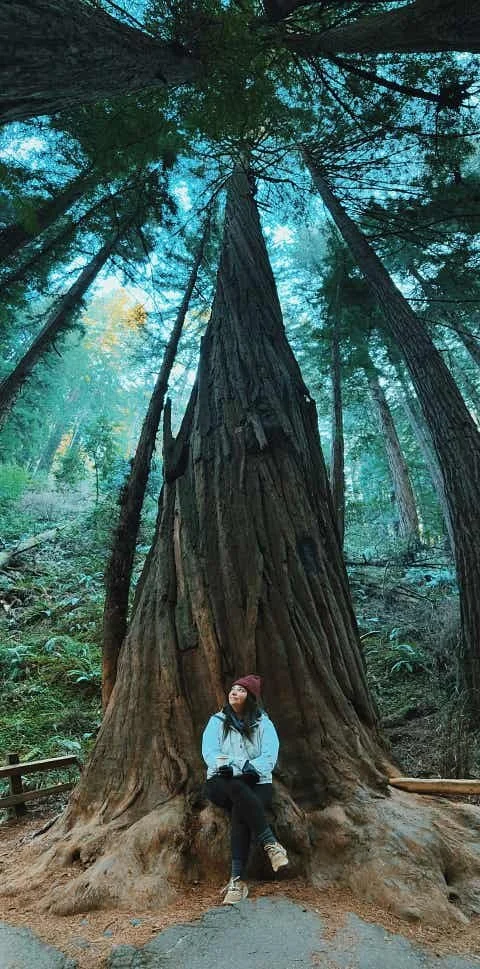
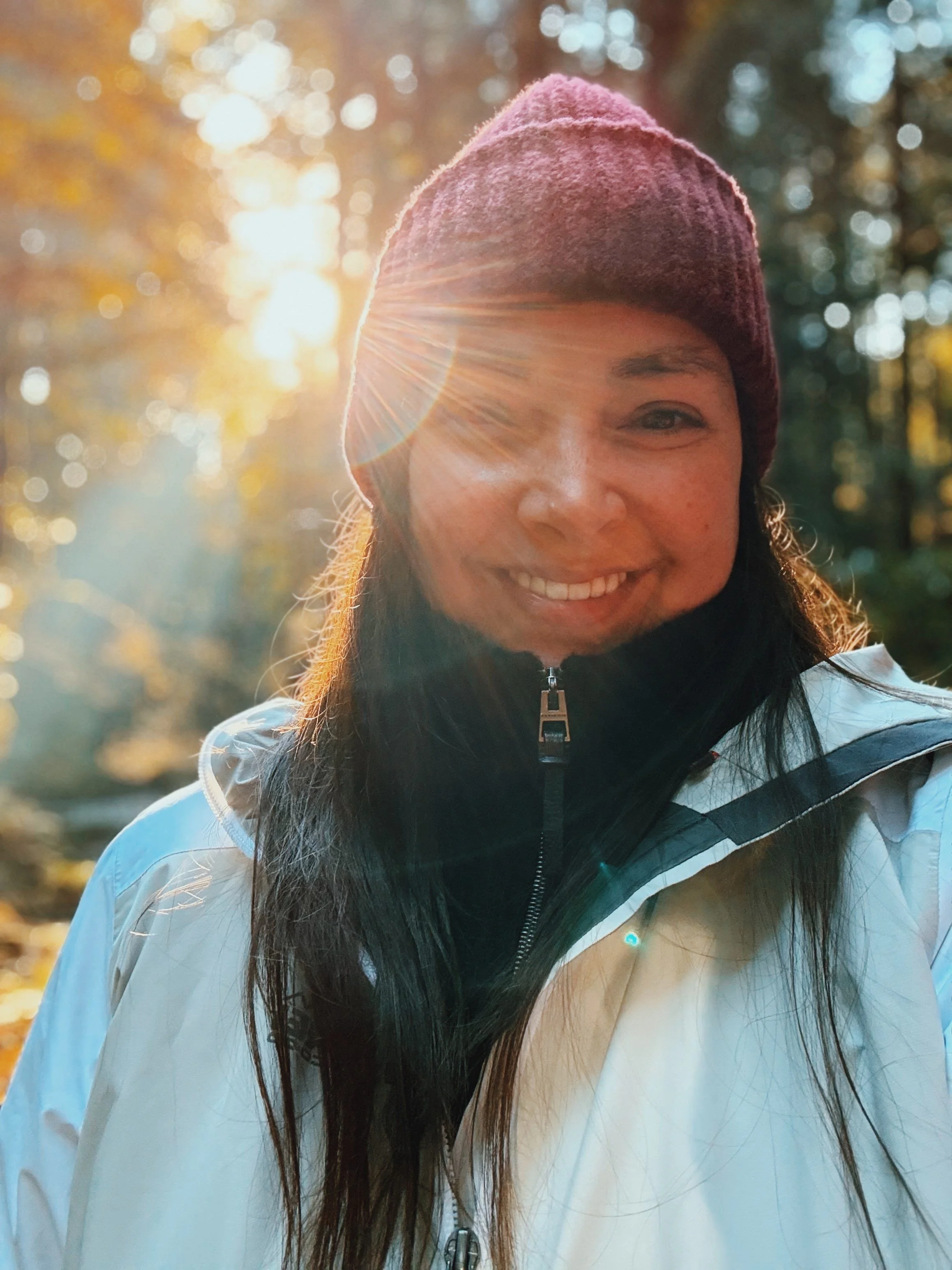
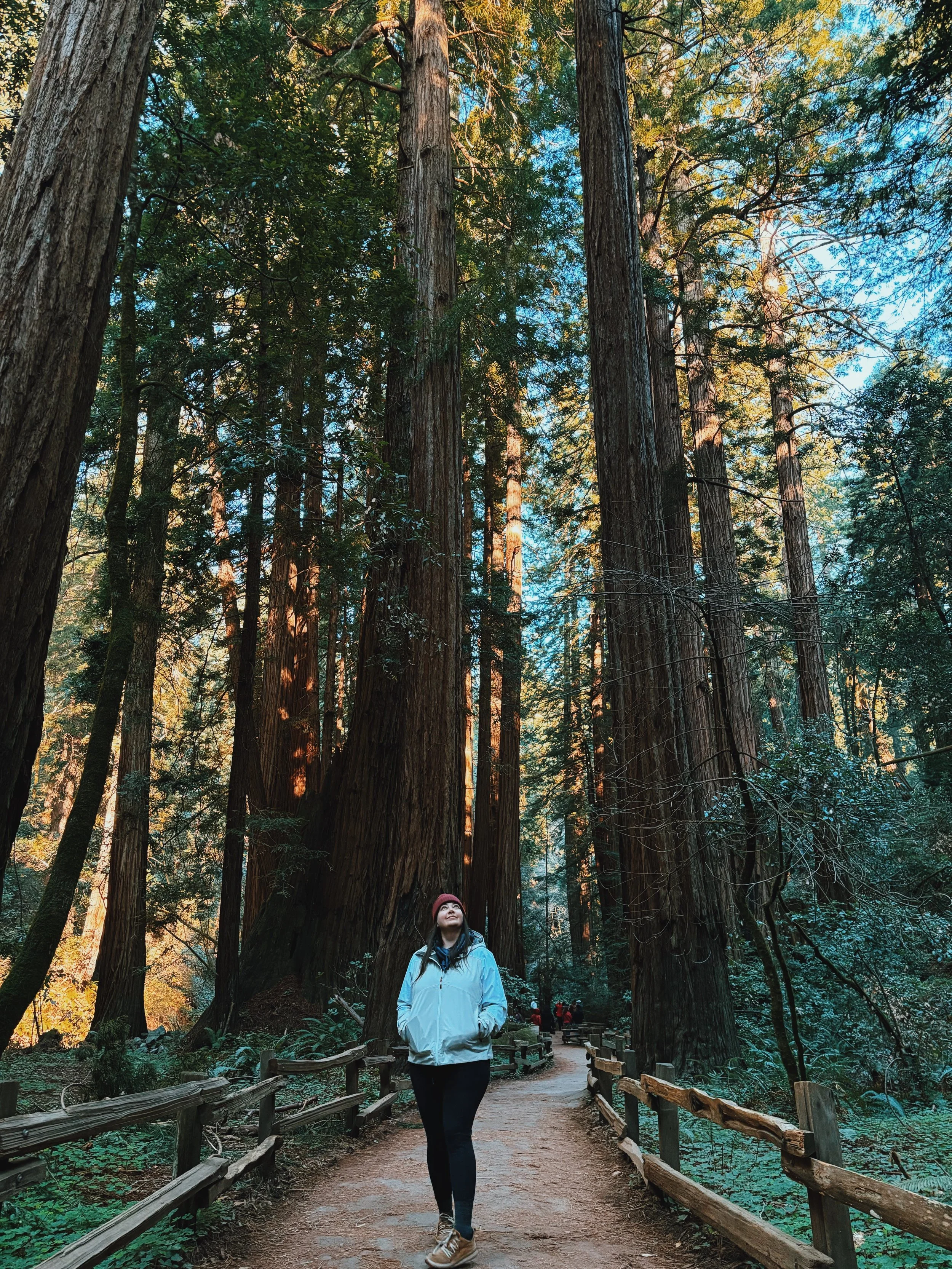
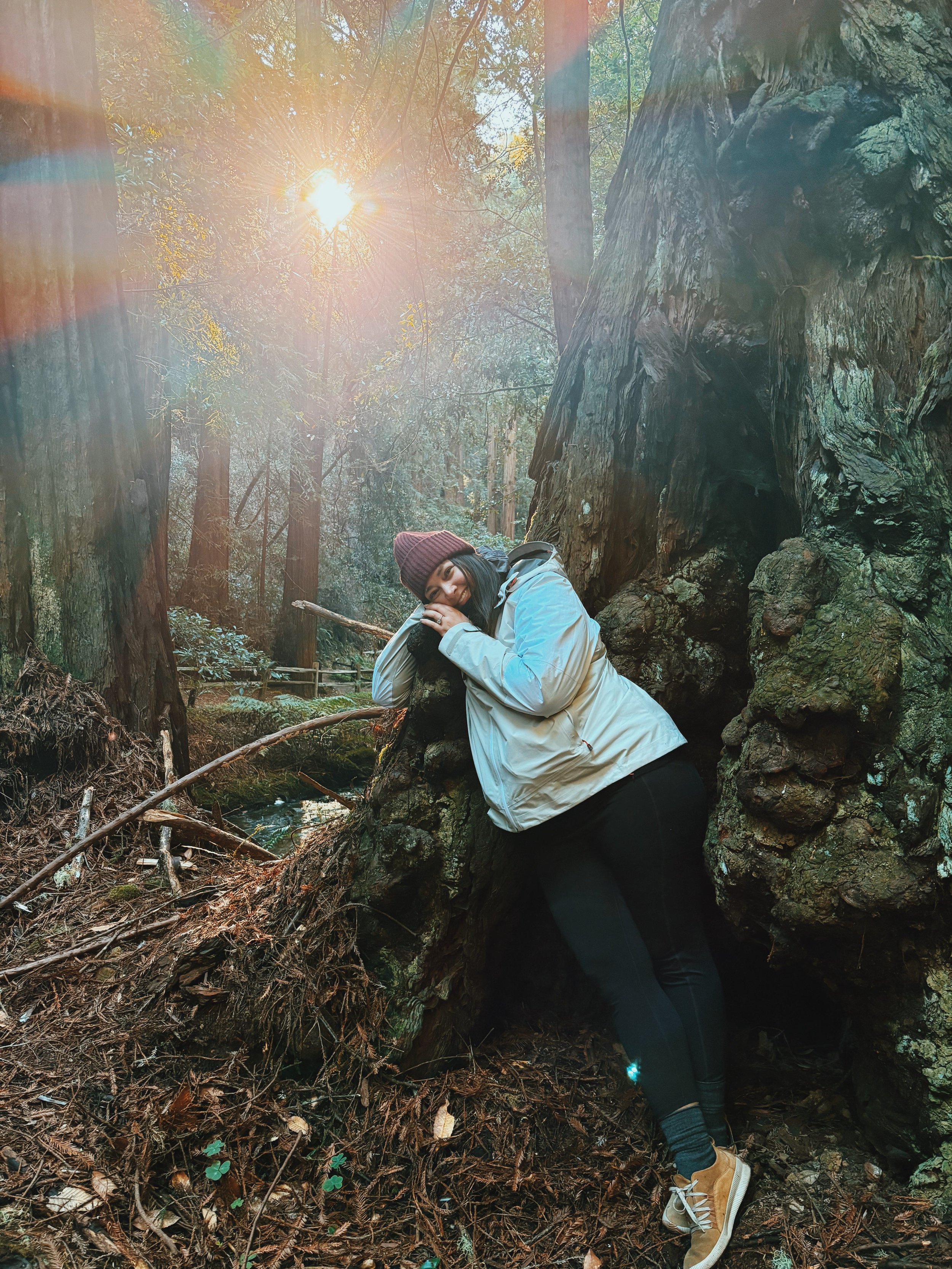
When we bought our first home, I had a friend who is of similar mind come and bless it with us. I have always believed that homes are alive and I wanted to introduce ourselves and connect with the spirit of ours. We named her Carol. The tree in our back yard is named Catherine. I thank them daily. I cleanse our home regularly. I talk to it. I always laugh when people come over and remark at how wonderful and peaceful our home feels - everyone can feel that work but struggles to name it. I get to smile and understand why. Turns out that is an ancient practice. One that I was doing without understanding why. So somewhere, I still hold the keys to the knowledge that was lost and I am just now learning how to name them. Intuition my guide, Pale Pale Moon playing in the background.
Sinners is a portal I’ll be revisiting over and over. I am in awe of the team that created it. I can only hope to be so lucky to be in rooms with such brilliant souls. It’s been a really good year for the horror film girlies. From Sinners, Frankenstein, Nosferatu to Bugonia, 28 Years Later and Keepers. Seems many artists have been doing the deep dives. And this is where I leave you friends, I have no perfect stopping point to this one.
I have posted this as a companion to my instagram channel: For the Love of Movies. Where I pick apart a film and talk about it. Our group votes on what films we want to chat about and I leave prompts, BTS content and general geekery for people to connect with. I write from a personal place, connecting my lived experiences to the films I watch and I’m passionate about it so my articles are always loooong. My hope is to one day convert y’all into paid subscribers but for now, I am building audience and these are free.
So if you like this guide, hello! My name is Melissa Fox. I am an Emmy Nominated documentary filmmaker in Chicago. I love chatting all things film, art and Chicago.
Come follow me @melissafoxmedia on instagram and learn more about my work with nonprofits at melissafoxmedia.com. I also leave my typos - so don’t come at me grammar police.
Thanks for reading! Subscribe for free to receive new posts and support my work.